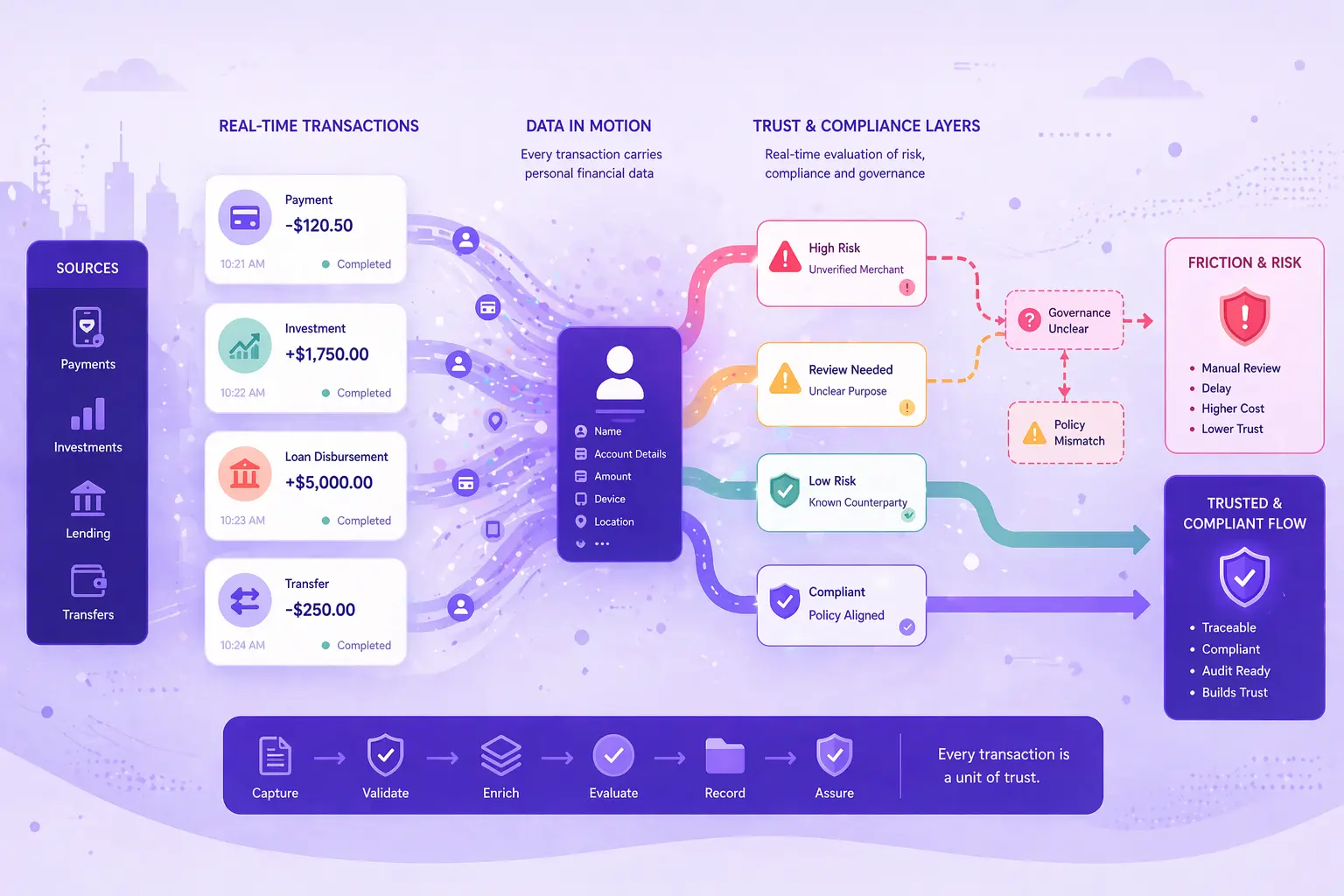
Continuous Compliance Across DPDPA and Global Frameworks
Controls are mapped once and reused continuously across DPDPA, ISO 27001, SOC 2, and PCI-aligned obligations.
In India's rapidly evolving fintech ecosystem, trust is not only built through innovation - it is sustained through how consistently organizations manage sensitive financial data. As personal data becomes central to every transaction, DPDPA compliance for fintech is becoming a critical pillar for fintech data protection in India, investor confidence, and long-term scalability.

Fintech organizations today are operating in an environment where:
Most teams already have strong compliance foundations in place. However, as scale increases, managing compliance as isolated activities across frameworks can create unnecessary coordination overhead.
From Checklist Compliance to Continuous Assurance
This is leading many organizations to rethink compliance - not as separate checklists, but as part of a broader, continuously managed security and risk program.
A natural evolution emerging across leading fintech teams is the shift toward managing compliance, risk, and security as one continuous, risk-led program instead of periodic, framework-specific efforts.
Controls are mapped once and reused continuously across DPDPA, ISO 27001, SOC 2, and PCI-aligned obligations.
Risk operations and data protection evidence move together in one model instead of disconnected workflows.
Teams see drift, risk movement, and control signals as they happen, without waiting for periodic reviews.
Orchestrated workflows reduce cross-team chasing and handoffs between security, risk, legal, and engineering.
This is not about replacing existing processes. It is about orchestrating them more effectively under a single, risk-aligned model.
In fintech, compliance is closely tied to business outcomes. Strong DPDPA compliance and data protection practices contribute directly to measurable trust, readiness, and execution momentum.
With a risk-led, continuously managed compliance program, fintech organizations can maintain clarity and readiness while focusing on innovation and customer experience.
Unify governance, risk, compliance and security operations into a continuous, integrated program — built for the speed and scrutiny of fintech.
Stay continuously compliant across DPDPA, ISO 27001, SOC 2 and more — without duplicating effort across frameworks.
Live dashboards surface risk, control health and alerts as they happen — so fintech teams act before issues escalate.
AI agents collect evidence from cloud, identity, DevOps and HR systems — packaged into audit-ready bundles automatically.
Centralize policies, audits, compliance operations and risk in a single integrated platform — no more siloed tools.
A single executive view keeps CISOs, CFOs and the Board continuously informed — without adding operational complexity.
See how fintech teams move from framework-by-framework compliance to a continuous, risk-led program - scaling DPDPA assurance without slowing growth.
DPDPA, ISO 27001, and SOC 2 are managed as separate programs. The same control gets evidenced multiple times, and overlaps are missed.
One control set mapped across DPDPA and global frameworks. Evidence collected once is reused everywhere — no duplicated effort, no drift.
DPDPA, ISO 27001, and SOC 2 are managed as separate programs. The same control gets evidenced multiple times, and overlaps are missed.
One control set mapped across DPDPA and global frameworks. Evidence collected once is reused everywhere — no duplicated effort, no drift.
If you're exploring ways to enhance your DPDPA compliance for fintech while aligning security, risk, and compliance into a continuous program, a risk-led approach can offer meaningful advantages.