Data-Handling Organizations
Organizations managing sensitive business or customer data.
Strengthen your organization's security posture with ISO 27001. Learn how to protect sensitive data, manage risks and build trust through a globally recognized standard.
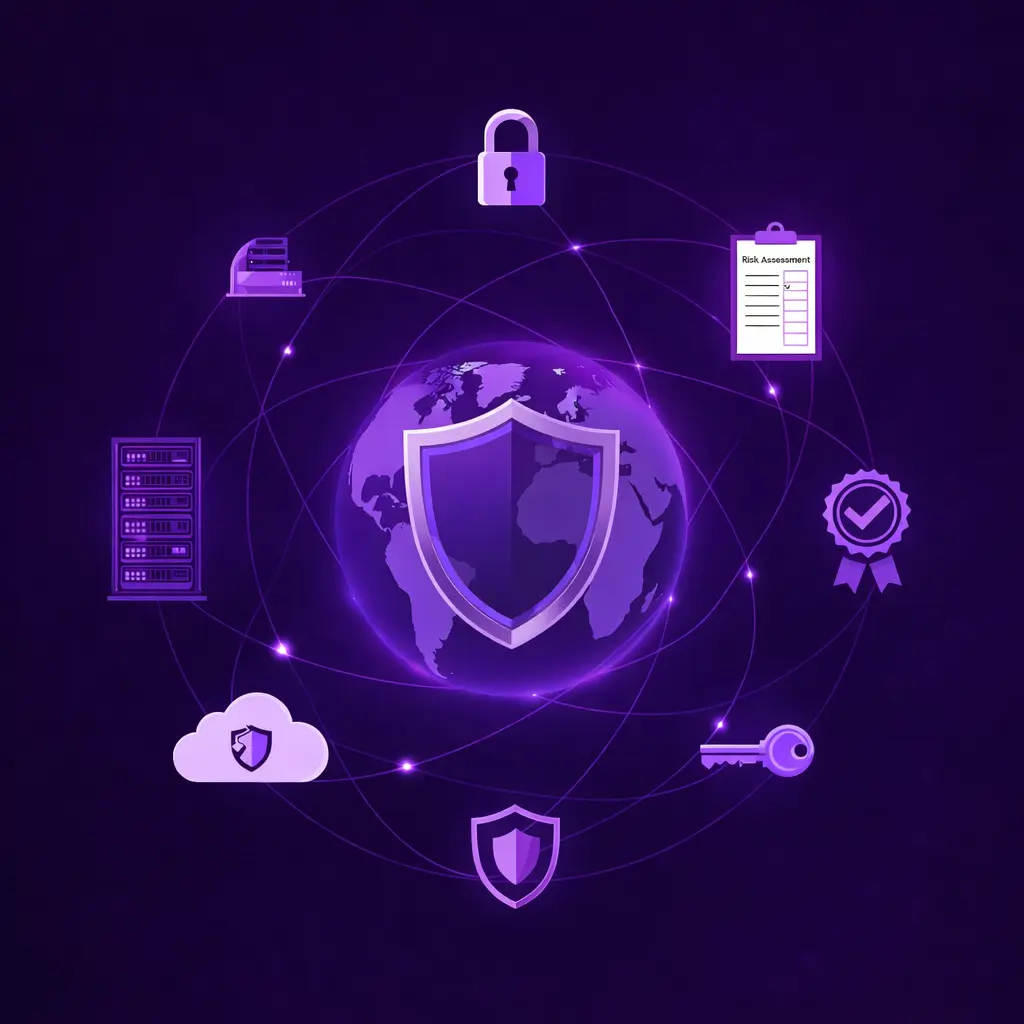



ISO 27001 is an international standard for managing information security. It provides a structured framework for organizations to protect sensitive data through an Information Security Management System (ISMS).
The standard helps businesses identify risks, implement security controls and continuously improve their security practices.
ISO 27001 applies to organizations of all sizes and industries, including SaaS, fintech, healthcare and enterprises handling critical or personal data.

Organizations managing sensitive business or customer data.
Companies handling financial, healthcare or personal information.
Businesses working with enterprise clients requiring security compliance.
Organizations aiming to strengthen their overall security posture.
If your organization stores, processes or transmits sensitive information, ISO 27001 is highly relevant.
ISO 27001 is built around core principles that ensure effective information security management:
Identify, assess and manage security risks.
Ensure only authorized users can access data.
Maintain accuracy and reliability of information.
Ensure data is accessible when needed.
Regularly monitor and enhance security controls.
While ISO 27001 is not focused on individual data rights like privacy laws, it ensures accountability toward stakeholders, including customers, partners and regulators. This builds trust and credibility across stakeholders.
Organizations implementing ISO 27001 must follow a structured approach to security. These responsibilities ensure a proactive and structured approach to security.
ISO 27001 emphasizes the importance of managing risks associated with third-party vendors. This helps reduce risks across the supply chain.
ISO 27001 requires organizations to be prepared for security incidents. Effective incident management reduces damage and strengthens resilience.
To achieve ISO 27001 certification, organizations must undergo audits. Regular audits ensure continuous compliance and improvement.
ISO 27001 is centered around ongoing risk management. This ensures that security evolves with the organization.
Define organizational boundaries, processes, and systems covered under your Information Security Management System.
Weak security practices increase exposure to breaches, incident recovery costs and direct financial losses.
Security failures can erode customer confidence and negatively impact retention and long-term brand value.
Without demonstrable security maturity, businesses may fail to qualify for enterprise procurement requirements.
Inadequate controls may trigger legal and regulatory action under applicable privacy and security regulations.
Incidents can disrupt critical operations and damage stakeholder trust across customers, partners and regulators.
Understanding ISO 27001 is the first step toward stronger information security. The next step is implementing the right processes, controls and systems to protect your organization effectively.
Not sure where to begin?
Assess your security readiness. Take the first step toward building a secure and trusted organization.